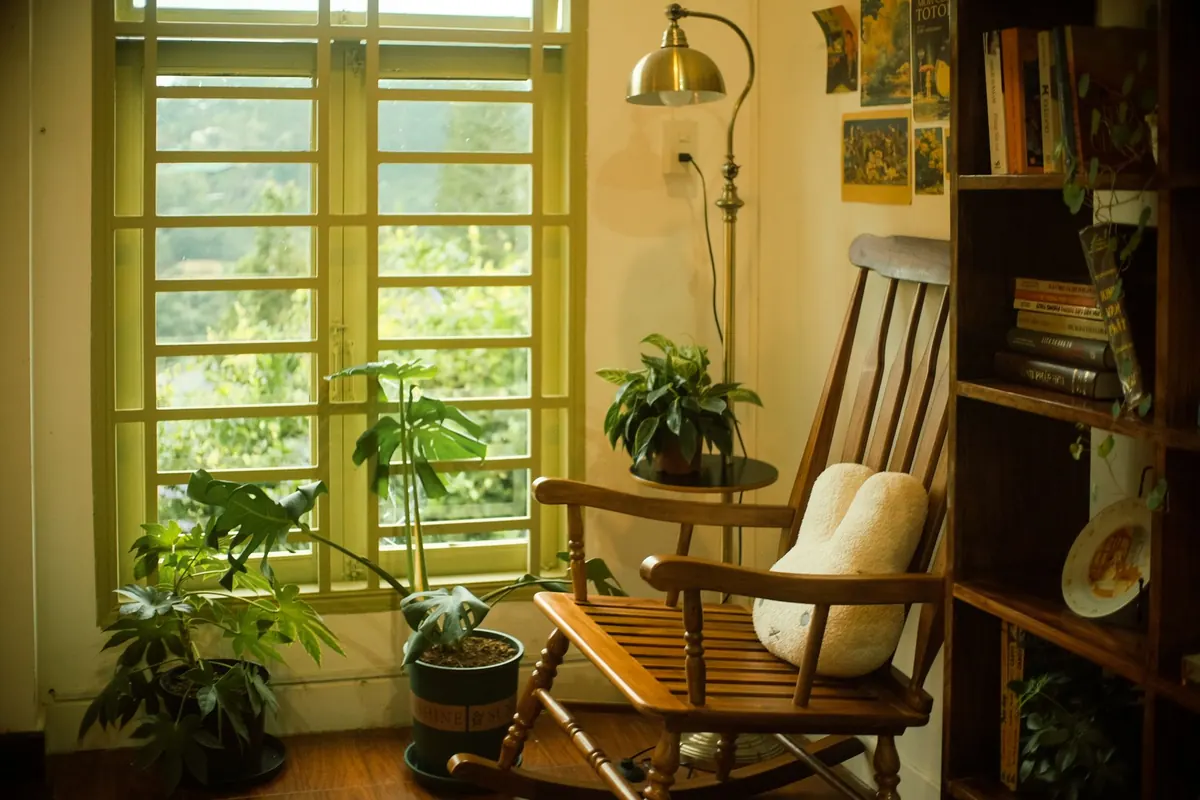
A four-by-four-foot corner is roughly the size of one generous armchair and a little breathing room. That is probably why so many of them end up holding a dying fern, a stack of magazines from two winters ago, and the vacuum cleaner. It is also exactly enough space for a genuine reading nook — the kind you sit in rather than arrange and admire. You do not need more furniture. You need four things that fit the corner instead of fighting it: a chair, a side table, a lamp, and something soft to layer.
Here is how to plan it, step by step, without turning a small space into a crowded one.
Mark the footprint on the floor with painter's tape first. Forty-eight inches each way sounds generous until you account for baseboards, a radiator, a door swing, or the path people take to the kitchen. Tape it out and you will immediately see whether a chair can sit against one wall or needs to be angled.
Then put a kitchen chair inside the tape and sit in it for ten minutes. Where do your elbows land? Where is the nearest outlet? Is there a heating vent blowing on your ankles or a radiator that will dry out a wool throw? If a radiator sits in the corner, keep fabric well clear of it.
Check the light at the hour you would actually use the corner. A spot that looks charming at noon may be a dim cave by seven in January. North-facing corners stay flat all day and need more help from lamps; west-facing ones can be hot and glaring in late afternoon. Both are workable, but you need to know which one you have.
Small armchairs usually run 28 to 34 inches across, and a wingback can reach 36, which matters in a corner this tight. Measure before you fall for something online. Then sit down and check three things: your feet reach the floor or a footstool, your elbows rest at roughly the height of the arms, and you can pull one leg up sideways without fighting the frame.
A low or tight back works better than a tall one if you want a shelf above the chair. A swivel base is worth considering if the corner is wedged, because it lets you turn toward the room instead of staring at two walls. And if you like a footstool, look for one about 14 to 16 inches high — with a tray on top, it doubles as a table when a friend visits.
Round tables forgive corners. A circle 16 to 20 inches across slides into an angle where a rectangle jabs you in the hip, and it holds a mug, a book, reading glasses, and a phone without looking crammed. The height should land at or just below the top of your chair arms, so you can set a cup down without reaching up or leaning forward.
If floor space is scarce, look at tables that step over the chair: C-tables, nesting pairs where you only pull out the small one, a sturdy garden stool, or an old stool with a tray. Keep the surface mostly clear. One small vase or a single candlestick is plenty; a table layered with objects becomes a shelf you have to clean.
One lamp is rarely enough in a corner, because a single source behind you throws your own shadow across the page. Aim for two: a task lamp for reading and a softer glow for the room. A floor lamp placed behind your shoulder works well if you have the inches; a swing-arm wall sconce is the better answer when you do not, and it frees the floor entirely.
Set the shade so the light falls onto the book rather than into your eyes. Reading light should come over your shoulder or from the side, not from a bulb you can see directly. A warm bulb around 2700K is comfortable for evenings, provided it is bright enough to read by without squinting — if you find yourself leaning toward the page, the bulb is too weak.
Cords are the giveaway of a nook that was not finished. Use a flat-plug extension so furniture can sit flush to the wall, tie the slack with velcro, and tuck the rest into a cord channel or behind a small basket. A smart plug lets you switch the lamp on from the doorway with your hands full.
Texture is what makes a small corner feel like a room. Stop at two or three throws; more than that and the chair disappears. A simple system:
Hold the palette to about three notes: a neutral base, one accent, and wood or brass. A 4x4 corner cannot carry six colours, and a full gallery wall will make it feel like a corridor.
A reading nook fails when it becomes decorative. Leave a clear spot for a mug, keep the floor free enough to walk into, and swap the books on the shelf every season so there is always something you are mid-way through within reach. If you stop sitting there after a fortnight, the problem is almost always light or reach — the bulb is in your eyes, or the table is an inch too far. Move one thing, not all of them, and give it another week.
Photo: Dongdilac / Pexels
Spot genuine antique cottage furniture by reading the wood, joinery, patina, hardware and price — and learn the...
Choose the right herbs, prep a box that drains properly, and a windowsill can supply fresh leaves all winter — even...

Two pantry-friendly methods — stovetop simmer pots and homemade linen sprays — fill a cottage with warm bakery...

Cozy cottage living, decorating, and inspiration.